 Mixing
United Nations University
 | |
Other name | UNU |
|---|---|
| Type | Research university, Think tank |
| Established | December 1972 (1972-12) |
| Founder | United Nations General Assembly |
| Affiliation | United Nations |
| Budget | $111.1 million (2017-18) [1] |
| Rector | Dr. David M. Malone |
| Students | 335 (2017) [1] |
| Postgraduates | 230 (2017) [1] |
Doctoral students | 105 (2017) [1] |
| Location | Tokyo , Japan 35°39′45″N 139°42′30″E / 35.66237°N 139.70836°E / 35.66237; 139.70836Coordinates: 35°39′45″N 139°42′30″E / 35.66237°N 139.70836°E / 35.66237; 139.70836 |
| Campus | Urban |
| Website | www.unu.edu |
 United Nations portal United Nations portal | |

United Nations University in Tokyo
The United Nations University (国際連合大学, Kokusai rengō daigaku) (UNU), established in 1973, is the academic and research arm of the United Nations. It is headquartered in Shibuya, Tokyo, Japan, with diplomatic status as a UN institution. Since 2010, UNU has been authorized by the United Nations General Assembly to grant degrees. It also provides a bridge between the UN and the international academic, policy-making and private sector communities.
Contents
1 Organisation and leadership
2 History
2.1 UNU Institutes and Vice-Rectorate
2.2 UNU as a degree-granting institution
3 Locations
4 Research
5 Institutes and programmes
5.1 Institutes
5.2 Operating Units
5.3 Programmes
5.4 Former
6 See also
7 References
8 External links
8.1 Video clips
Organisation and leadership
The university is headed by a rector, who holds the rank of Under-Secretary-General of the United Nations.
To date, there have been six Rectors at UNU.
The current Rector, since March 2013, is Dr. David M. Malone of Canada.
List of Rectors of United Nations University:
| # | Rector | Took office | Left office |
|---|---|---|---|
| 1 | James M. Hester | 11 November 1974 | 10 April 1980 |
| 2 | Soedjatmoko | 10 April 1980 | 30 March 1987 |
| 3 | Heitor Gurgulino de Souza | 30 March 1987 | 1 September 1997 |
| 4 | Hans J.A. Van Ginkel | 1 September 1997 | 1 September 2007 |
| 5 | Konrad Osterwalder | 1 September 2007 | 28 February 2013 |
| 6 | David M. Malone | 1 March 2013 | Incumbent |
The Council of UNU[2] is the governing board of the University and is composed of 24 members who are appointed by the Secretary-General of the United Nations with the concurrence of the Director-General of UNESCO.[3]
History
The University was established in 1973 and formally began its activities in 1976 following the signature of the permanent headquarters agreement between the United Nations and Japan.[4] The creation of the United Nations University was set in motion by Secretary-General U Thant in 1969.[5]
UNU Institutes and Vice-Rectorate
Over the years, several Institutes of UNU were created to help with the research initiatives of the United Nations. Most notably, in 2007, a vice-rectorate was established in Bonn (UNU-ViE), Germany, as a way of strengthening UNU's presence in Europe. UNU-ViE is dedicated to developing knowledge-based sustainable solutions for global problems and is, therefore, an active organizer of international science policy dialogues for sustainability.
UNU as a degree-granting institution
In December 2009, the UN General Assembly amended the UNU Charter to make it possible for UNU to "grant and confer master's degrees and doctorates, diplomas, certificates and other academic distinctions under conditions laid down for that purpose in the statutes by the Council."[6]
In 2013, UNU-ISP announced its intention to seek accreditation from the National Institution for Academic Degrees and University Evaluation (NIAD-UE) which is the Japanese accreditation agency for higher education institutions.[7] UNU-IAS was formally accredited in April 2015, making it the first international organization to be recognized by the NIAD-UE.[8]
Locations
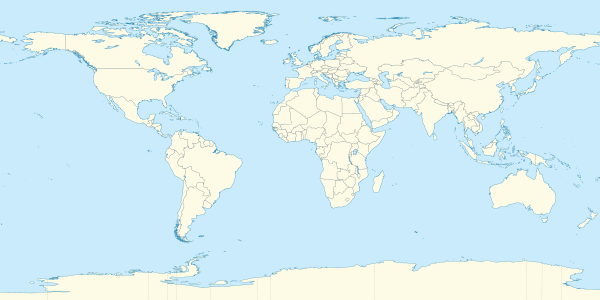
The university has several campuses spread over five continents. Its headquarters are located at the UNU Centre in Tokyo, Japan.

Research
The role of the UN University is to generate new knowledge, educate, enhance individual and institutional capacities, and disseminate its useful information to relevant audiences. Within the scope of these five thematic clusters, the UN University undertakes:
- Cross-cultural, interdisciplinary research (utilizing innovative, science-based techniques and methodologies to study important global processes and elaborate forward-looking solutions) and targeted foresight and policy studies (aimed at developing policy-relevant prescriptions and evaluating the feasibility and comparative advantages of each option);
- Postgraduate-level education (degree-oriented programmes and specialized training focused on problems and solutions rather than academic disciplines) and capacity development activities (aimed at helping developing and transitional countries to enhance local potential to address current problems/confront emergent challenges); and
- Knowledge sharing and transfer (to deliver relevant information about UN University research, current scientific advances and best practices, in a timely manner and in a usable form, to those who most need it and can best utilize it).
As prescribed in the United Nations University Strategic Plan 2011–2014, the 26 major topics of focus of the UN University's academic work fall within five interdependent thematic clusters:
- Peace, Security and Human Rights; Peace building and peace keeping, Conflict resolution and human security, Fostering dialogue among civilizations, religions and cultures, Human rights and ethics, Gender equality and mainstreaming,
- Human and Socio-economic Development and Good Governance; Growth and economic development, Alleviating poverty and inequalities, Good governance, Enhancing educational capacities, Fair trade, Processes and consequences of regional integration and cooperation, Leadership, management and entrepreneurship.
- Global Health, Population and Sustainable Livelihoods; Global health, Safe water and sanitation, Food and nutrition for human and social development, Combating HIV/AIDS, Population changes and migration.
- Global Change and Sustainable Development; Climate change — adaptation and mitigation, Ecological health and biodiversity, New risk and vulnerabilities, Sustainable land, agriculture and natural resources management, Green economy.
- Science, Technology, Innovation and Society; Science, technology and innovation, Sustainable energy futures, Sustainable urban futures, Sustainable housing and construction.
Collectively, these thematic clusters define the programme space within which the UN University undertakes its academic activities. Some key perspectives (such as gender equality, human rights and sustainability) pervade all aspects of the UN University's work.
Institutes and programmes
The academic work of the United Nations University is carried out by a global system of Institutes, Operating Units, and Programmes located in more than 12 countries around the world.
Institutes
Institute on Comparative Regional Integration Studies (UNU-CRIS) in Bruges, Belgium
Institute for Environment and Human Security[9] (UNU-EHS) in Bonn, Germany
Institute for Integrated Management of Material Fluxes and of Resources[10] (UNU-FLORES) in Dresden, Germany
Institute of Advanced Studies[11] (UNU-IAS) in Yokohama, Japan
International Institute for Global Health[12] (UNU-IIGH) in Kuala Lumpur, Malaysia
Institute on Computing and Society (UNU-CS) in Macau, China
Institute for Natural Resources in Africa[13] (UNU-INRA) in Accra, Ghana
Institute for Sustainability and Peace[14] (UNU-ISP) in Tokyo, Japan
Maastricht Economic and Social Research and Training Institute on Innovation and Technology (UNU-MERIT) in Maastricht, The Netherlands
Institute for Water, Environment and Health[15] (UNU-INWEH) in Hamilton, Canada
World Institute for Development Economics Research (UNU-WIDER) in Helsinki, Finland
Operating Units
Operating Unit on Policy-Driven Electronic Governance (UNU-EGOV) in Guimarães, Portugal
Programmes
Programme for Biotechnology in Latin America and the Caribbean[16] (UNU-BIOLAC) in Caracas, Venezuela
Food and Nutrition Programme for Human and Social Development[17] (UNU-FNP) in Ithaca, United States
Fisheries Training Programme[18] (UNU-FTP) in Reykjavik, Iceland
Geothermal Training Programme[19] (UNU-GTP) in Reykjavik, Iceland
Land Restoration Training Programme[20] (UNU-LRT) in Reykjavik, Iceland
- International Gender Equality Studies Training Programme (UNU-GEST) in Reykjavik, Iceland
Former
International Institute for Software Technology (UNU-IIST)) in Macau, China (was closed in 2012, later gave origin to UNU-EGOV in 2014 and UNU-CS in 2016)
See also
- Akino Memorial Research Fellowship
- United Nations Institute for Training and Research
- United Nations University Press
- University for Peace
- World Maritime University
References
^ abcd "United Nations University: Annual Report 2017" (PDF). United Nations University. United Nations University. n.d. Retrieved 24 November 2018..mw-parser-output cite.citation{font-style:inherit}.mw-parser-output .citation q{quotes:"""""""'""'"}.mw-parser-output .citation .cs1-lock-free a{background:url("//upload.wikimedia.org/wikipedia/commons/thumb/6/65/Lock-green.svg/9px-Lock-green.svg.png")no-repeat;background-position:right .1em center}.mw-parser-output .citation .cs1-lock-limited a,.mw-parser-output .citation .cs1-lock-registration a{background:url("//upload.wikimedia.org/wikipedia/commons/thumb/d/d6/Lock-gray-alt-2.svg/9px-Lock-gray-alt-2.svg.png")no-repeat;background-position:right .1em center}.mw-parser-output .citation .cs1-lock-subscription a{background:url("//upload.wikimedia.org/wikipedia/commons/thumb/a/aa/Lock-red-alt-2.svg/9px-Lock-red-alt-2.svg.png")no-repeat;background-position:right .1em center}.mw-parser-output .cs1-subscription,.mw-parser-output .cs1-registration{color:#555}.mw-parser-output .cs1-subscription span,.mw-parser-output .cs1-registration span{border-bottom:1px dotted;cursor:help}.mw-parser-output .cs1-ws-icon a{background:url("//upload.wikimedia.org/wikipedia/commons/thumb/4/4c/Wikisource-logo.svg/12px-Wikisource-logo.svg.png")no-repeat;background-position:right .1em center}.mw-parser-output code.cs1-code{color:inherit;background:inherit;border:inherit;padding:inherit}.mw-parser-output .cs1-hidden-error{display:none;font-size:100%}.mw-parser-output .cs1-visible-error{font-size:100%}.mw-parser-output .cs1-maint{display:none;color:#33aa33;margin-left:0.3em}.mw-parser-output .cs1-subscription,.mw-parser-output .cs1-registration,.mw-parser-output .cs1-format{font-size:95%}.mw-parser-output .cs1-kern-left,.mw-parser-output .cs1-kern-wl-left{padding-left:0.2em}.mw-parser-output .cs1-kern-right,.mw-parser-output .cs1-kern-wl-right{padding-right:0.2em}
^ "UNU Council". unu.edu. Archived from the original on 15 June 2011. Retrieved 29 May 2011.
^ "Director-General of UNESCO, Irina Bokova | United Nations Educational, Scientific and Cultural Organization". www.unesco.org. Retrieved 2016-09-21.
^ "UNTC". un.org.
^ United Nations General Assembly Session 24 Resolution 2573. International university A/RES/2573(XXIV) 13 December 1969. Retrieved 2008-05-02.
^ "UNU Charter". unu.edu.
^ "Jobs | UNU Institute for Sustainability and Peace". Archived from the original on 22 September 2013. Retrieved 14 September 2013.
^ "UNU-IAS Accredited by the National Institution for Academic Degrees and University Evaluation". unu.edu. May 1, 2015. Retrieved 2017-04-03.
^ "UNU-EHS". unu.edu.
^ "UNU-FLORES Dresden". unu.edu.
^ "Institute for the Advanced Study of Sustainability". unu.edu.
^ "International Institute for Global Health". unu.edu.
^ "UNU-INRA". unu.edu.
^ United Nations University. "UNU Institute for Sustainability and Peace (UNU-ISP)". unu.edu. Archived from the original on 9 June 2010.
^ "UNU-INWEH - United Nations University Institute for Water, Environment and Health: The UN Think Tank on Water". UNU-INWEH.
^ "unu-biolac.com". unu-biolac.com.
^ "Archived copy". Archived from the original on 29 January 2010. Retrieved 29 January 2010.CS1 maint: Archived copy as title (link)
^ "The United Nations University Fisheries Training Programme in Iceland". The United Nations University Fisheries Training Programme in Iceland.
^ Geothermal Training Programme. "Geothermal Training Programme". Geothermal Training Programme.
^ The United Nations University Land Restoration Training Programme. "The United Nations University Land Restoration Training Programme". The United Nations University Land Restoration Training Programme.
External links
 | Wikimedia Commons has media related to United Nations University. |
- United Nations University Headquarters
- United Nations University Vice-Rectorate in Europe (UNU-ViE)
- United Nations University Office in Paris (UNU-OP)
- United Nations University Office in New York (UNU-ONY)
Video clips
- UNU Video Portal
- UNU YouTube channel
- UNU Vimeo channel
 United Nations United Nations | |||||||||
|---|---|---|---|---|---|---|---|---|---|
| |||||||||
| United Nations System |
| ||||||||
| Members and observers |
| ||||||||
| History |
| ||||||||
| Resolutions |
| ||||||||
| Elections |
| ||||||||
| Related |
| ||||||||
| Other |
| ||||||||
Authority control  |
|
|---|


Comments
Post a Comment