 Mixing
List of Chief Ministers of Punjab (India)
| Chief Minister of Punjab ਮੁੱਖ ਮੰਤਰੀ ਪੰਜਾਬ | |
|---|---|
 Seal of Punjab | |
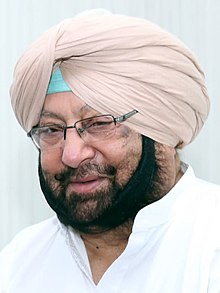 Incumbent Captain Amarinder Singh since 16 March 2017 | |
| Appointer | Governor of Punjab |
| Precursor | Prime Minister Of Punjab |
| Inaugural holder | Gopi Chand Bhargava |
| Formation | 15 August 1947 (1947-08-15) |
The Chief Minister of Punjab, a north Indian state, is the head of the Government of Punjab. As per the Constitution of India, the Governor of Punjab is the state's de jure head, but de facto executive authority rests with the chief minister. Following elections to the Punjab Legislative Assembly, the governor usually invites the party (or coalition) with a majority of seats to form the government. The governor appoints the chief minister, whose council of ministers are collectively responsible to the assembly. Given that he has the confidence of the assembly, the chief minister's term is for five years and is subject to no term limits.[1]
Contents
1 History
2 Key
3 Prime Ministers of the Punjab (1937-1947)
4 Chief Ministers of PEPSU (1948-1956)
5 Chief Minister of Punjab (1947-1966) (Punjab, Haryana and Himachal)
6 Chief Minister of Punjab (Since 1966)
7 Former Living Chief Ministers
8 See also
9 Notes and references
10 External links
History
Pre-Independence
After passing of Government of India Act 1935, Punjab Assembly was established in 1937 when first time Punjab Provincial Assembly elections, 1937 were held and Unionist Party won the election and Sir Sikandar Hayat Khan became the Prime Minister of the Punjab and hold the position till his death in 1942 and he was succeeded by Malik Khizar Hayat Tiwana.
In 1946 when Punjab Provincial Assembly elections, 1946 were held Unionist Party stood fourth place but with the support of Indian National Congress and Shiromani Akali Dal formed the government and second time Malik Khizar Hayat Tiwana became the Prime Minister of the Punjab but resigned on 2 March 1947 against decision of Partition of India.
After Independence
Since 1947, Punjab has had fifteen chief ministers. The first was Gopi Chand Bhargava of the Indian National Congress party, who was sworn-in on 15 August 1947, when India gained independence from the British. He was succeeded by fellow Congressman Bhim Sen Sachar, who was then subsequently replaced after 188 days by former Chief Minister Gopi Chand Bhargava. After a brief term, President Rajendra Prasad placed the Punjab Legislative Assembly under suspension for ninth months to help the state government gets its act together. In 1952, the first state elections took place for the Legislative Assembly. The results of the election saw the return of the Congress government with former Chief Minister Bhim Sen Sachar as its leader. After he resigned in 1956, Partap Singh Kairon became chief minister. Serving until 1964, Khairon remain's one of Punjab's longest-serving chief ministers. He was followed by the returning Chief Minister Gopi Chand Bhargava, who briefly held office as acting chief minister for only 15 days. In July 1964, Ram Kishan assumed the office and served for two years. His tenure was followed by the President's rule which lasted for 119 days. During this time, the state of Haryana was separated from Punjab.
After reorganisation of Punjab
The first chief minister of the newly re-configured state was Giani Gurmukh Singh Musafir who led a Congress government from the Vidhan Parishad, one of only two to have done so. In the 1967 elections, he was voted out of power in favour of the Akali Das Sant Fateh Singh Group whose leader Gurnam Singh became the first non-Congress chief minister. Gurnam Singh's government was succeeded by three short-lived Akali Dal governments—Lachhman Singh Gill's government for less than a year and for a little more than a year under the returning Gurnam Singh and Parkash Singh Badal. After 272 days under President's rule, the Congress party returned to power under future President Zail Singh. In 1977, Parkash Singh Badal became the chief minister for the second time. Darbara Singh became chief minister in 1980 and remained in office for three years before a long period under President's rule. A brief interlude under Surjit Singh Barnala followed, after which three Congress-led governments took office—led by Beant Singh from 1992 to 1995, Harcharan Singh Brar from 1995 to 1996 and Rajinder Kaur Bhattal from 1996 to 1997. Upon taking office, Rajinder Kaur Bhattal became the first female chief minister of Punjab and overall the 8th female chief minister in India.
Parkash Singh Badal assumed office for the third time in 1997 and became the first chief minister, since Kairon's resignation in 1964, to serve a full term. Badal was succeeded by Congressman Amarinder Singh, who also successfully served a full term. The incumbent Chief Minister of Punjab is Captain Amarinder Singh who is heading an Indian National Congress government since 16 March 2017.
Key
Designated as Indian National Congress (Indira) from (1977-1996)
|
|
Prime Ministers of the Punjab (1937-1947)

Map of Punjab during British India
| No | Name (constituency) | Birth - Death | Image | Took Office | Left Office | Term | Party (Coalition with) | Election (Assembly) | Appointed by | |
|---|---|---|---|---|---|---|---|---|---|---|
| 1 | Sikandar Hayat Khan (west punjab, landlord) | 5 June 1892 - 26 December 1942 | 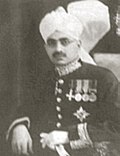 | 5 April 1937 | 26 December 1942 [d] | 5 years, 265 days | Unionist Party | 1937 (1) | Herbert William Emerson | |
| 2 | Malik Khizar Hayat Tiwana (khushab) | 7 August 1900 - 20 January 1972 |  | 30 December 1942 | 21 March 1946 | 4 years, 62 days | - (1) | Bertrand Glancy | ||
| 21 March 1946 | 2 March 1947 [RES] | Unionist Party (INC and SAD) | 1946 (2) | |||||||
| - | Governor Rule (Evan Meredith Jenkins) | 2 March 1947 | 15 August 1947[pd] | 166 days | - | - | Earl Mountbatten | |||
Chief Ministers of PEPSU (1948-1956)

Map of PEPSU in red color
| No | Name | Took Office | Left Office | Term | Party (coalition with) | Election (Assembly) | Appointed by | Deputy Chief Minister | |
|---|---|---|---|---|---|---|---|---|---|
| - | Gian Singh Rarewala (caretaker) | 15 July 1948 | 13 January 1949 | 2 years, 312 days | IND (SAD) | - | Yadavindra Singh | None | |
1 | Gian Singh Rarewala | 13 January 1949 | 23 May 1951 [RES] | - | |||||
2 | Raghbir Singh | 23 May 1951 | 21 April 1952 [RES] | 334 days | Indian National Congress | - | Brish Bhan | ||
(1) | Gian Singh Rarewala | 22 April 1952 [§] | 5 March 1953[RES] | 317 days | IND (UDF) | 1952 (1) | None | ||
| (i) | Vacant[a] (President's rule) | 5 March 1953 | 8 March 1954 | 1 year, 3 days | - | - | Rajendra Prasad | ||
(2) | Raghbir Singh | 8 March 1954 [§] | 12 January 1955 [d] | 310 days | Indian National Congress | 1954 (2) | Yadavindra Singh | Brish Bhan | |
3 | Brish Bhan | 12 January 1955 | 1 November 1956 [pd] | 1 year, 294 days | - (2) | None | |||
In 1956 PEPSU was merged with Punjab.
Chief Minister of Punjab (1947-1966) (Punjab, Haryana and Himachal)

Map of East Punjab in red color from 1947-1966
| № | Name (birth–death); constituency | Portrait | Party (coalition with) | Term of office[3] | Elections (Vidhan Sabha) | Appointed by(Governor) | |||
|---|---|---|---|---|---|---|---|---|---|
| 1 | Gopi Chand Bhargava (1889–1966) MLA for University | Indian National Congress | 15 August 1947 | 13 April 1949[NC] | 1 year, 241 days | - (Interim Assembly) | Chandulal Madhavlal Trivedi | ||
| 2 | Bhim Sen Sachar (1894–1978) MLA for Lahore City |  | 13 April 1949 | 18 October 1949[RES] | 188 days | ||||
| (1) | Gopi Chand Bhargava (1889–1966) MLA for University | 18 October 1949[§] | 20 June 1951[RES] | 1 year, 245 days | |||||
| (i) | Vacant[a] (President's rule) | None | 20 June 1951 | 17 April 1952 | 302 days | — | Rajendra Prasad | ||
| (2) | Bhim Sen Sachar (1894–1978) MLA for Ludhiana City South | | Indian National Congress | 17 April 1952[§] | 23 January 1956[RES] | 3 years, 281 days | 1952 (1st) | Chandulal Madhavlal Trivedi | |
| 3 | Partap Singh Kairon (1901–1965) MLA for Sujanpur |  | 23 January 1956 | 9 April 1957 | 8 years, 150 days | Chandeshwar Prasad Narayan Singh | |||
| 9 April 1957 | 11 March 1962 | 1957 (2nd) | |||||||
| 11 March 1962 | 21 June 1964[RES] | 1962 (3rd) | Narhar Vishnu Gadgil | ||||||
| (1) | Gopi Chand Bhargava (1889–1966) MLC in Vidhan Parishad | 21 June 1964[§] | 6 July 1964[RES] | 15 days | Hafiz Mohamad Ibrahim | ||||
| 4 | Ram Kishan MLA for Jullundur City North East | 7 July 1964 | 5 July 1966 | 1 year, 363 days | |||||
| (ii) | Vacant[a] (President's rule) | None | 5 July 1966 | 1 November 1966 | 119 days | — | Sarvepalli Radhakrishnan | ||
Chief Minister of Punjab (Since 1966)

Map of present Punjab in red color
| № | Name (birth–death); constituency | Portrait | Party (coalition with) | Term of office[3] | Elections (Vidhan Sabha) | Appointed by(Governor) | |||
|---|---|---|---|---|---|---|---|---|---|
| 5 | Giani Gurmukh Singh Musafir (1899–1976) MLC in Vidhan Parishad |  | Indian National Congress | 1 November 1966 | 8 March 1967 | 127 days | — (3rd) | Dharma Vira | |
| 6 | Gurnam Singh (1899–1973) MLA for Qila Raipur | 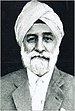 | Akali Dal - Sant Fateh Singh (BJS and CPI) | 8 March 1967 | 25 November 1967[RES] | 262 days | 1967 (4th) | ||
| 7 | Lachhman Singh Gill (1917–1969) MLA for Dharamkot | Punjab Janta Party (INC) | 25 November 1967 | 23 August 1968 | 272 days | D. C. Pavate | |||
| (iii) | Vacant[a] (President's rule) | None | 23 August 1968 | 17 February 1969 | 178 days | — | Zakir Hussain | ||
| (6) | Gurnam Singh (1899–1973) MLA for Qila Raipur | | Shiromani Akali Dal (BJS) | 17 February 1969[§] | 27 March 1970[RES] | 1 year, 38 days | 1969 (5th) | D. C. Pavate | |
| 8 | Parkash Singh Badal (born 1927) MLA for Giddarbaha |  | 27 March 1970 | 14 June 1971 | 1 year, 79 days | ||||
| (iv) | Vacant[a] (President's rule) | None | 14 June 1971 | 17 March 1972 | 277 days | — | Varahagiri Venkata Giri | ||
| 9 | Zail Singh (1916–1994) MLA for Anandpur Sahib |  | Indian National Congress | 17 March 1972 | 30 April 1977 | 5 years, 44 days | 1972 (6th) | D. C. Pavate | |
| (v) | Vacant[a] (President's rule) | None | 30 April 1977 | 20 June 1977 | 51 days | — | B. D. Jatti | ||
| (8) | Parkash Singh Badal (born 1927) MLA for Giddarbaha | | Shiromani Akali Dal (JP) | 20 June 1977[§] | 17 February 1980 | 2 years, 242 days | 1977 (7th) | Mahendra Mohan Choudhry | |
| (vi) | Vacant[a] (President's rule) | None | 17 February 1980 | 6 June 1980 | 110 days | — | Neelam Sanjiva Reddy | ||
| 10 | Darbara Singh (1916–1990) MLA for Nakodar | Indian National Congress (Indira) | 6 June 1980 | 6 October 1983 | 3 years, 122 days | 1980 (8th) | Jaisukh lal Hathi | ||
| (vii) | Vacant[a] (President's rule) | None | 6 October 1983 | 29 September 1985 | 1 year, 358 days | — | Zail Singh | ||
| 11 | Surjit Singh Barnala (1925—2017) MLA for Barnala |  | Shiromani Akali Dal | 29 September 1985 | 11 June 1987 | 1 year, 255 days | 1985 (9th) | Arjun Singh | |
| (viii) | Vacant[a] (President's rule) | None | 11 June 1987 | 25 February 1992 | 4 years, 259 days | — | Zail Singh | ||
| 12 | Beant Singh (1922–1995) MLA for Jalandhar Cantonment |  | Indian National Congress (Indira) | 25 February 1992 | 31 August 1995[†] | 3 years, 187 days | 1992 (10th) | Surendra Nath | |
| 13 | Harcharan Singh Brar (1922–2009) MLA for Muktsar | 31 August 1995 | 21 November 1996[RES] | 1 year, 82 days | B.K.N. Chhibber | ||||
| 14 | Rajinder Kaur Bhattal (born 1945) MLA for Lehra | 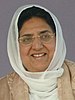 | 21 November 1996 | 11 February 1997 | 82 days | ||||
| (8) | Parkash Singh Badal (born 1927) MLA for Lambi | | Shiromani Akali Dal (BJP) | 12 February 1997[§] | 26 February 2002 | 5 years, 14 days | 1997 (11th) | ||
| 15 | Amarinder Singh (born 1942) MLA for Patiala Town | 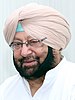 | Indian National Congress | 26 February 2002 | 1 March 2007 | 5 years, 3 days | 2002 (12th) | J. F. R. Jacob | |
| (8) | Parkash Singh Badal (born 1927) MLA for Lambi | | Shiromani Akali Dal (BJP) | 1 March 2007[§] | 14 March 2012 | 10 years, 15 days | 2007 (13th) | S. F. Rodrigues | |
| 14 March 2012 | 16 March 2017 | 2012 (14th) | Shivraj Patil | ||||||
| (15) | Amarinder Singh (born 1942) MLA for Patiala Town | | Indian National Congress | 16 March 2017[§] | Incumbent | 2 years, 4 days | 2017 (15th) | V. P. Singh Badnore | |
Former Living Chief Ministers
| Name | Birth | Tenure | |
|---|---|---|---|
Prakash Singh Badal | 8 December 1927 (age, 91) | 1970-1971, 1977-1980, 1997-2002, 2007-2012 and 2012-2017 | |
Rajinder Kaur Bhattal | 30 December 1945 (age, 73) | 1996-1997 | |
See also
- List of governors of Punjab (India)
- List of Deputy Chief Ministers of Punjab (India)
Notes and references
- Notes
^ abcdefghi President's rule may be imposed when the "government in a state is not able to function as per the Constitution", which often happens because no party or coalition has a majority in the assembly. When President's rule is in force in a state, its council of ministers stands dissolved. The office of chief minister thus lies vacant, and the administration is taken over by the governor, who functions on behalf of the central government. At times, the legislative assembly also stands dissolved.[2]
- References
^ Durga Das Basu. Introduction to the Constitution of India. 1960. 20th Edition, 2011 Reprint. pp. 241, 245. LexisNexis Butterworths Wadhwa Nagpur. .mw-parser-output cite.citation{font-style:inherit}.mw-parser-output .citation q{quotes:"""""""'""'"}.mw-parser-output .citation .cs1-lock-free a{background:url("//upload.wikimedia.org/wikipedia/commons/thumb/6/65/Lock-green.svg/9px-Lock-green.svg.png")no-repeat;background-position:right .1em center}.mw-parser-output .citation .cs1-lock-limited a,.mw-parser-output .citation .cs1-lock-registration a{background:url("//upload.wikimedia.org/wikipedia/commons/thumb/d/d6/Lock-gray-alt-2.svg/9px-Lock-gray-alt-2.svg.png")no-repeat;background-position:right .1em center}.mw-parser-output .citation .cs1-lock-subscription a{background:url("//upload.wikimedia.org/wikipedia/commons/thumb/a/aa/Lock-red-alt-2.svg/9px-Lock-red-alt-2.svg.png")no-repeat;background-position:right .1em center}.mw-parser-output .cs1-subscription,.mw-parser-output .cs1-registration{color:#555}.mw-parser-output .cs1-subscription span,.mw-parser-output .cs1-registration span{border-bottom:1px dotted;cursor:help}.mw-parser-output .cs1-ws-icon a{background:url("//upload.wikimedia.org/wikipedia/commons/thumb/4/4c/Wikisource-logo.svg/12px-Wikisource-logo.svg.png")no-repeat;background-position:right .1em center}.mw-parser-output code.cs1-code{color:inherit;background:inherit;border:inherit;padding:inherit}.mw-parser-output .cs1-hidden-error{display:none;font-size:100%}.mw-parser-output .cs1-visible-error{font-size:100%}.mw-parser-output .cs1-maint{display:none;color:#33aa33;margin-left:0.3em}.mw-parser-output .cs1-subscription,.mw-parser-output .cs1-registration,.mw-parser-output .cs1-format{font-size:95%}.mw-parser-output .cs1-kern-left,.mw-parser-output .cs1-kern-wl-left{padding-left:0.2em}.mw-parser-output .cs1-kern-right,.mw-parser-output .cs1-kern-wl-right{padding-right:0.2em}
ISBN 978-81-8038-559-9. Note: although the text talks about Indian state governments in general, it applies for the specific case of Punjab as well.
^ Amberish K. Diwanji. "A dummy's guide to President's rule". Rediff.com. 15 March 2005.
^ ab page v of Punjab Vidhan Sabha Compendium. Punjab Legislative Assembly. Retrieved on 25 September 2018.
External links
- https://web.archive.org/web/20070213075808/http://punjabassembly.nic.in/members/showcm.asp


Comments
Post a Comment